Lucky Button

Press For Instant Silliness!

The Lucky Charm Phenomenon: Why Objects Make Us Feel Safer and More Confident

By Lucky Button September 21, 2025


Your lucky pen gets you through every exam. Your grandmother’s ring makes you feel protected. That “lucky” shirt helps you perform better at work. Most people have at least one special object they believe brings good fortune. But here’s the surprising part: science shows they actually work. Just not in the way you think.

You probably know someone who swears by their lucky charm. Maybe it’s a bracelet they never take off, a coin they keep in their pocket, or a stuffed animal that’s been with them since childhood.

And if you’re honest, you probably have one too.

Most of us have at least one object that makes us feel more confident, safer, or just generally better about whatever challenge we’re facing. These things might seem silly or irrational to other people, but they feel important to us.

Here’s what might surprise you: researchers have spent years studying lucky charms, and they’ve discovered something incredible. These objects actually do improve performance, boost confidence, and help people succeed.

The twist? It has nothing to do with magic and everything to do with how your brain works.

Why We Reach for Lucky Objects

Think about the last time you faced something scary or uncertain. A job interview, a big test, a first date, or maybe a medical appointment. How did you feel?

Chances are, you felt nervous, worried, or like things were completely out of your control. And if you’re like most people, you probably looked for ways to feel better about the situation.

The Human Need for Control

Uncertainty Anxiety: Our brains are wired to feel stressed when we can’t predict or control what happens next

Control-Seeking Behavior: When we feel powerless, we look for anything that might give us even a tiny bit of influence over the outcome

Comfort Objects: Lucky charms provide a sense of having “backup” or “extra help” when facing challenges

This isn’t weakness or stupidity. It’s just how humans are built. We’ve always needed ways to cope with uncertainty, danger, and the unknown. For thousands of years, people have carried special objects, performed rituals, and created symbols to help them feel more prepared for whatever life throws at them.

The difference today is that we actually understand why this works. And the answer isn’t supernatural. It’s psychological.

The Science That Proves Lucky Charms Work

German researcher Lysann Damisch wanted to know if lucky charms actually affect performance. So she designed some clever experiments to find out.

In one study, she took students to a putting green and gave them golf balls. But here’s the key part: she told half the students that their ball was “lucky” and had performed really well for previous players. The other half just got regular balls with no special story.

The Golf Ball Experiment Results

Students who thought they had “lucky” golf balls performed 35% better than students with regular balls. Same golf balls, same putting green, same conditions. The only difference was what they believed about their equipment.

What This Proves: The belief in luck creates real, measurable improvements in performance.

But Damisch didn’t stop there. She wanted to understand exactly how this worked. So she did another experiment with memory tests.

She asked students to bring their personal lucky charms to the lab. Half the students got to keep their charms during the test. The other half had to leave them in another room.

The results were clear: students with their lucky charms scored higher on memory tests, set more ambitious goals for themselves, and kept trying longer when questions got difficult.

The charms didn’t give them magical memory powers. They gave them something even more powerful: confidence.

Your Brain on Confidence Boosters

When you believe you have a lucky charm helping you, several things happen in your brain and body. These changes are real and measurable, even though the “luck” itself isn’t.

How Lucky Charms Change Your Brain

Reduced Anxiety: Stress hormones like cortisol decrease when you feel “protected” by your charm

Increased Focus: Less worry about failure means more mental energy for the actual task

Higher Expectations: You set more ambitious goals because you believe you have extra help

More Persistence: You keep trying longer because you feel like success is more likely

Better Mood: Feeling “lucky” triggers positive emotions that improve overall performance

This is similar to how the placebo effect works in medicine. When people believe a pill will help them feel better, they often actually do feel better, even if the pill contains no active ingredients. The belief triggers real changes in the body.

Lucky charms work the same way. Your belief in the charm triggers real changes in your brain chemistry, attention, and behavior. These changes then lead to actual improvements in how you perform.

It’s not magic, but it might as well be magic from your perspective, because the results are real.

The Psychology of Feeling in Control

One of the biggest reasons lucky charms work is that they help us feel like we have some control over situations that are actually pretty random or unpredictable.

Think about it: most of the times we reach for lucky charms are exactly when we feel most powerless. Before a job interview where we don’t know what questions they’ll ask. Before a game where we don’t know how the other team will play. Before a date where we don’t know if the other person will like us.

Common “Lucky Charm” Situations

Students: Lucky pens for tests, lucky seats in the classroom, lucky clothes for exam day

Athletes: Lucky socks, pre-game rituals, lucky equipment or gear

Performers: Lucky jewelry, specific warm-up routines, lucky backstage rituals

Job Seekers: Lucky interview outfits, lucky resume folders, lucky morning routines

Travelers: Lucky travel items, protection charms, safe journey tokens

In all these situations, there’s a lot we can’t control. But carrying a lucky charm gives us the feeling that we’re doing something to influence the outcome. And that feeling of doing something, rather than just hoping for the best, makes a huge psychological difference.

This connects to what psychologists call “self-efficacy” – your belief in your own ability to handle challenges and succeed at tasks. People with higher self-efficacy perform better, try harder, and bounce back faster from setbacks.

Lucky charms boost self-efficacy by making you feel like you have extra resources, backup support, or special advantages. Even though the advantage is all in your head, the boost to your confidence is real.

Lucky Charms Around the World

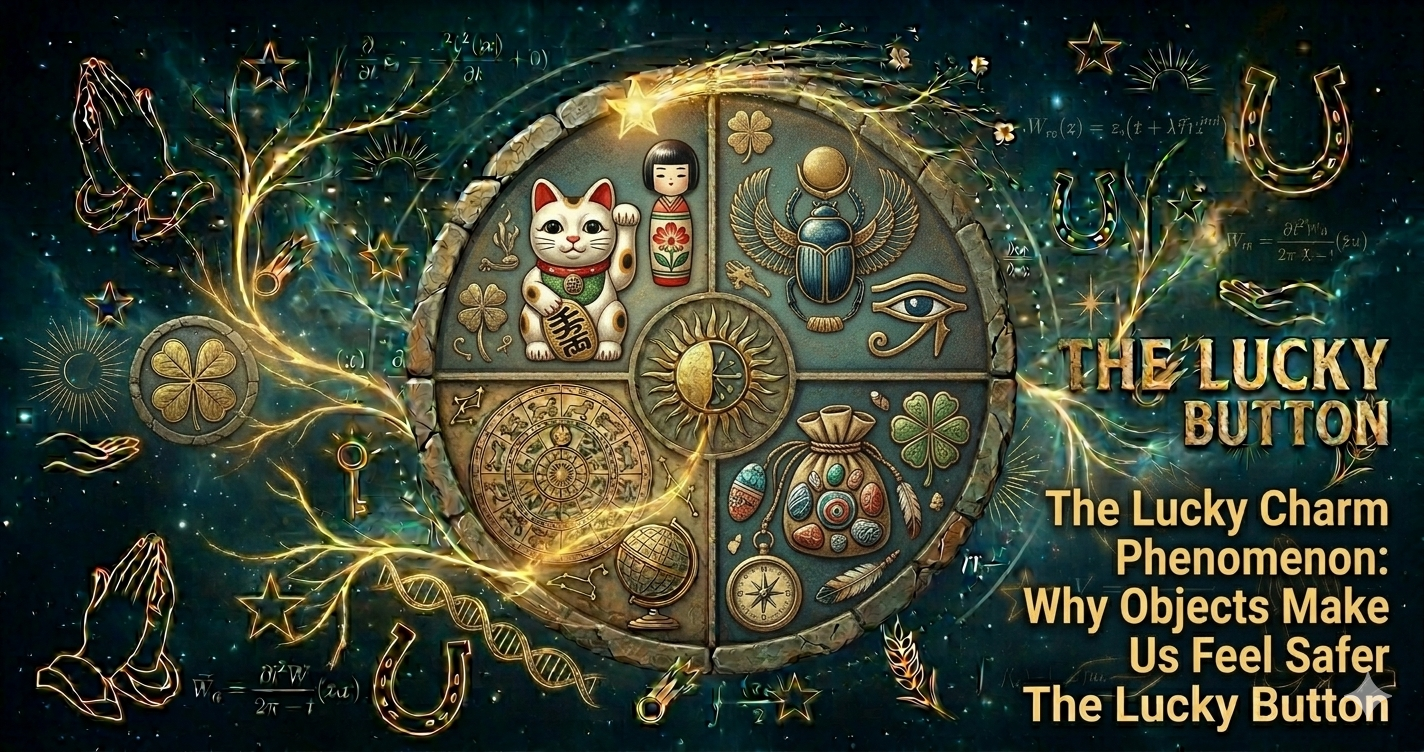
Every culture on earth has some version of lucky objects, protective charms, or special symbols. This isn’t a coincidence. It shows that the human need for these confidence boosters is universal.

Lucky Charms Across Cultures

Irish: Four-leaf clovers (representing hope, faith, love, and luck)

Chinese: Lucky coins, jade jewelry, golden toads, and red envelopes

Middle Eastern: Evil eye amulets and hamsa hands for protection

Japanese: Maneki-neko (beckoning cats), omamori (protective charms), and daruma dolls

Native American: Dream catchers, medicine bags, and animal spirit totems

Indian: Elephant figurines, lotus symbols, and Ganesha charms

European: Horseshoes, rabbit’s feet, and wishbones

African: Ankh symbols, cowrie shells, and protective masks

What’s interesting is that the specific objects vary, but the psychological function is the same everywhere. People choose items that feel powerful, meaningful, or connected to something larger than themselves.

Some lucky charms are tied to religious beliefs. Others come from cultural traditions. Some are personal objects that gained special meaning through experience.

But they all serve the same basic human need: they help us feel more confident and prepared when facing uncertainty.

This shows us that lucky charms aren’t really about the objects themselves. They’re about what the objects represent to us and how they make us feel.

How Confirmation Bias Makes Magic Seem Real

Once you start believing in a lucky charm, your brain begins collecting evidence that it works. This happens through something called confirmation bias – our tendency to notice and remember information that supports what we already believe.

How Your Brain “Proves” Your Charm Works

Selective Attention: You notice more good things that happen when you have your charm

Memory Bias: You remember successes with your charm better than failures

Attribution Error: You give your charm credit for positive outcomes but blame other factors for negative ones

Pattern Recognition: Your brain looks for connections between having your charm and good results

Here’s an example: let’s say you wear your lucky ring to a job interview and get the job. Your brain will likely connect these two events, even though your qualifications, preparation, and interview performance were probably much more important factors.

But if you wear the ring to another interview and don’t get that job, you’ll probably attribute the failure to something else. Maybe the interviewer didn’t like you, or maybe there was a better candidate, or maybe the company had already decided on someone else.

This isn’t conscious manipulation of the facts. It’s just how human brains work. We’re natural pattern-seekers, and we’re especially good at finding patterns that support beliefs we want to keep.

This actually helps explain why lucky charms can stay “effective” for years. Every time something good happens while you have your charm, it strengthens your belief. And every time something bad happens, you find other explanations.

The result is that your charm seems to have a pretty good track record, which makes you more confident in its power, which makes you perform better when you have it, which creates more good outcomes to attribute to the charm.

It’s a self-reinforcing cycle that can last for years or even decades.

Athletes, Performers, and the Power of Ritual

Some of the most successful people in the world rely heavily on lucky charms and rituals. Professional athletes, performers, and artists often have elaborate pre-performance routines that include specific objects, actions, or ceremonies.

Famous Lucky Charm Users

Michael Jordan: Wore his college basketball shorts under his NBA uniform for every game

Serena Williams: Bounces the ball exactly five times before her first serve and twice before her second

Wade Boggs: Ate chicken before every game and took batting practice at exactly 5:17 PM

Luciano Pavarotti: Always searched for a bent nail to put in his pocket before performances

Stephen King: Sits in the same chair with the same supplies arranged the same way for every writing session

These people aren’t delusional. They understand that their success comes primarily from talent, hard work, and skill. But they also understand that confidence and mental state matter enormously in high-pressure situations.

Their lucky objects and rituals serve multiple purposes. They create familiar, comforting routines that help manage pre-performance anxiety. They provide a sense of control in situations where many factors are unpredictable. And they trigger the confidence boost that can make the difference between good and great performances.

This is why many sports psychologists don’t try to talk athletes out of their superstitions. Instead, they help them develop healthy rituals that genuinely improve focus and confidence.

The key is making sure the ritual helps rather than hurts. If your lucky charm makes you feel more confident and prepared, it’s useful. If it makes you anxious or dependent, it might be time to reconsider the relationship.

The Difference Between Helpful and Harmful Beliefs

Not all lucky charm beliefs are created equal. Some genuinely help people perform better and feel more confident. Others can become problematic or even harmful.

Healthy vs. Unhealthy Lucky Charm Use

Healthy Signs:
– The charm boosts your confidence without making you dependent
– You can still perform well without it if necessary
– It reduces anxiety rather than creating it
– You understand it’s psychological rather than magical
– It connects to positive memories or meaningful experiences

Warning Signs:
– You can’t function without your charm
– Losing it causes extreme distress or panic
– You believe it has actual supernatural powers
– It becomes more important than skill development or preparation
– You have multiple charms with complicated rules and requirements

The healthiest approach to lucky charms is understanding them as confidence tools rather than magical objects. When you know that the power comes from your own mind rather than from supernatural forces, you can use these tools more effectively and avoid becoming dependent on them.

This is similar to how understanding the psychology of luck can help people feel more in control of their lives without falling into magical thinking.

The goal isn’t to become completely rational and give up all your lucky objects. The goal is to use them in ways that genuinely help you perform better and feel more confident.

Creating Your Own Confidence Tools

If you don’t currently have a lucky charm but want to try using one, or if you want to make your existing charm more effective, here are some science-based approaches:

Test Your Lucky Charm Knowledge

How well do you understand the psychology behind why lucky objects work? Take our quiz to discover what makes some charms more effective than others!

Take the Lucky Charm Quiz

Choose something that feels personally meaningful rather than just copying what other people use. The more connected you feel to an object, the more confidence it’s likely to provide.

This could be something that reminds you of a person who believes in you, like jewelry from a family member. It could be connected to a previous success, like a pen you used during your best performance on a test. Or it could be something that represents qualities you want to embody, like strength, wisdom, or calmness.

The most effective lucky charms often combine several elements: personal meaning, positive memories, and symbolic representation of the qualities you want to access.

But remember, the real power is coming from you. The object is just helping you access confidence and focus that you already possess.

When Lucky Charms Stop Working

Sometimes people notice that their lucky charm seems to lose its effectiveness over time. This can happen for several reasons, and understanding why can help you decide what to do about it.

Why Lucky Charms Lose Power

Habituation: Your brain gets used to the charm and stops having the same emotional response

Changed Associations: If you have the charm during several negative experiences, your brain may start associating it with failure rather than success

Increased Skepticism: As you learn more about how psychology works, pure belief may become harder to maintain

Life Changes: What felt meaningful at one stage of life might not feel relevant anymore

Overuse: Using the charm for everything rather than special occasions can reduce its psychological impact

If your lucky charm stops feeling effective, you have several options. You can take a break from using it and see if the effectiveness returns. You can create new positive associations by using it only for situations where you feel well-prepared. Or you can retire it with gratitude and find a new confidence tool that better fits your current life.

The important thing to remember is that the charm was never the source of your abilities. It was just helping you access confidence and focus that were already there. If the charm stops helping, those abilities haven’t disappeared.

The Real Magic Behind the Magic

Understanding the psychology of lucky charms doesn’t make them less powerful. If anything, it makes them more interesting and useful.

When you know that your brain is creating the positive effects, you can be more intentional about how you use these tools. You can choose objects and rituals that genuinely help you feel more confident and prepared. You can avoid becoming dependent on external objects for your sense of capability.

“The real magic of lucky charms isn’t supernatural. It’s the very human ability to use symbols and objects to access our own inner resources of confidence, focus, and determination.”

— Dr. Richard Wiseman, psychologist and author of “The Luck Factor”

Most importantly, you can appreciate lucky charms for what they really are: clever psychological tools that humans have developed to help themselves perform better under pressure.

This connects to research about how our brains create patterns and meaning even in random events. We’re natural meaning-makers, and lucky charms are one of the ways we create positive meaning and confidence in uncertain situations.

The fact that millions of successful people throughout history have used lucky objects tells us something important: these tools work, even if they don’t work the way we think they do.

So whether you carry a lucky coin, wear a special piece of jewelry, or have a pre-performance ritual that helps you feel prepared, you’re participating in one of humanity’s oldest and most effective confidence-building strategies.

The charm itself might not be magical, but your ability to use it to access better performance definitely is.

Your Relationship with Confidence Tools

The next time you reach for your lucky charm or perform your pre-game ritual, take a moment to appreciate what’s really happening. You’re not depending on supernatural forces to help you succeed. You’re using a sophisticated psychological tool to access your own capabilities more fully.

And that’s actually much more impressive than magic would be.

Magic would mean you’re powerless without external help. Understanding the psychology means you’re clever enough to use mental tools that genuinely improve your performance. You’re taking advantage of how your brain works to give yourself real advantages in challenging situations.

Whether you realize it or not, you’re participating in a practice that connects you to every culture throughout human history. People have always found ways to feel more confident and prepared when facing the unknown.

Your lucky charm is part of that tradition. It’s a bridge between your everyday self and your most confident, capable self. And now that you understand how that bridge works, you can use it even more effectively.

Ready to explore how your own mind creates feelings of luck and confidence? Try our Lucky Button and notice how even a simple ritual can shift your mindset and help you access more positive expectations about your day.

The button itself isn’t magical any more than your lucky charm is. But the experience of using it mindfully can remind you that you have more influence over your confidence and outlook than you might think.

And sometimes, that reminder is exactly the kind of luck you need.

Tags:

Lucky Charms
Psychology
Confidence
Performance
Self-Efficacy
Superstition
Mental Tools
Cultural Beliefs
Confirmation Bias
Sports Psychology
Ritual
Placebo Effect

Experience The Lucky Button

Ready to discover how simple confidence tools can shift your mindset? Try our original Lucky Button and experience firsthand how a small ritual can access your own inner resources of optimism and determination.


Lucky Button - Daily dose of positivity connecting ancient wisdom with modern psychology

Create Your Own Lucky Moment

Tell Us: What does luck mean to you?

Drop a comment below or hit the Lucky Button and start your journey today.