📋 Table of Contents
- 🌍 The Universal Human Impulse: Why All Cultures Have Lucky Numbers
- 🎭 Cultural Number Systems: A Global Perspective
- 🧠 The Cognitive Science of Number Preferences
- 🔬 The Neuroscience of Numerical Meaning
- 📚 Cultural Transmission and Number Beliefs
- ⚠️ The Dark Side: When Number Beliefs Become Problematic
- 🎯 Practical Applications and Implications
- 🔮 The Future of Number Beliefs
- ✨ Conclusion: The Enduring Power of Numerical Meaning
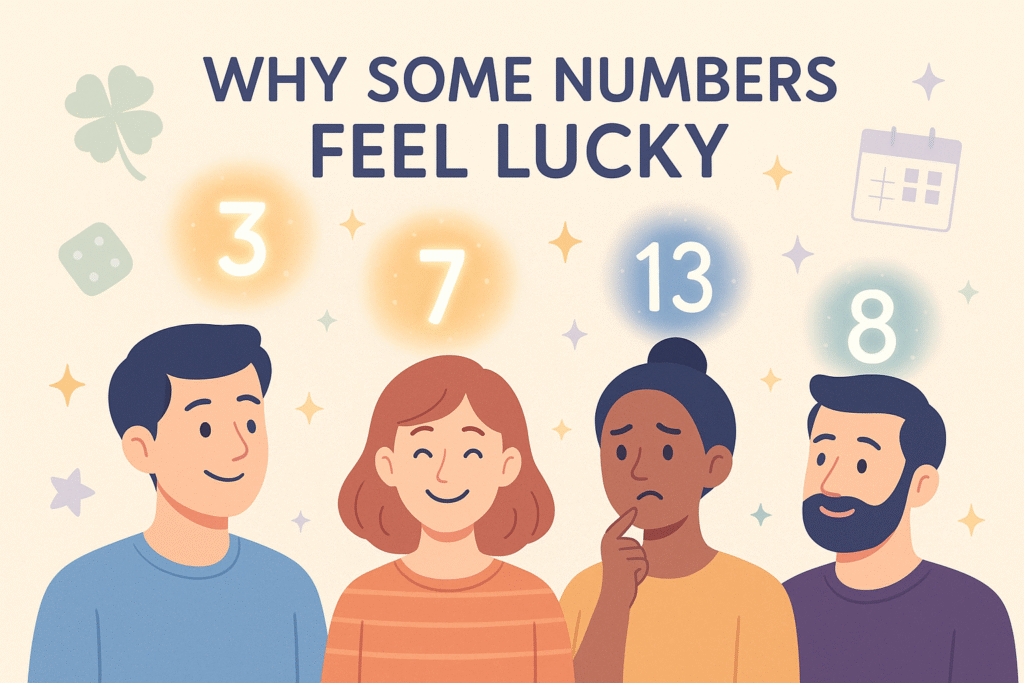
Think of your favorite number right now. Pause for a moment and ask yourself: why that specific number? Why not the one before it, or after it? What makes this particular arrangement of digits feel more “right” or “lucky” to you?
Whether your mind immediately went to 7, 3, 8, 21, or perhaps your birth date, the fact that you have a numerical preference at all reveals something profound about human psychology. We are the only species known to attribute magical properties to abstract mathematical concepts, creating elaborate belief systems around digits that, mathematically speaking, are perfectly equivalent.
This isn’t just harmless superstition—it’s a window into fundamental aspects of how our minds work, how cultures transmit meaning, and how language itself shapes thought. The science behind lucky numbers reveals fascinating insights about pattern recognition, cultural evolution, linguistic influence, and the psychology of meaning-making.
Welcome to the surprising world where mathematics meets mythology, and numbers become carriers of hope, fear, and cultural identity.
The Universal Human Impulse: Why All Cultures Have Lucky Numbers
Every human culture ever studied has developed preferences for certain numbers over others. This universality suggests that numerical preferences aren’t just cultural quirks—they reflect fundamental aspects of how human minds process information and create meaning.
Archaeological Evidence of Ancient Number Beliefs
Archaeological research reveals that numerical symbolism dates back to humanity’s earliest civilizations. Ancient Mesopotamian cuneiform tablets show preferential use of certain numbers in religious and commercial contexts, while Egyptian hieroglyphs demonstrate systematic numerical symbolism tied to religious beliefs.
The ancient Greeks developed elaborate theories about numbers, with Pythagoras declaring that “all is number” and attributing mystical properties to different digits. This wasn’t primitive thinking—it was sophisticated philosophical investigation into the relationship between mathematical concepts and reality.
🏛️ Historical Number Symbolism
Ancient Babylon: The number 60 was considered perfect (basis of our time and angle measurements)
Ancient Egypt: The number 3 symbolized completeness (past, present, future)
Ancient Greece: The number 10 represented perfection (tetractys)
Ancient China: Numbers were classified as yin (even) or yang (odd)
Ancient Rome: Odd numbers were considered more powerful and fortunate
Cross-Cultural Patterns in Number Preferences
While specific lucky numbers vary between cultures, the underlying patterns show remarkable consistency. Research by cognitive anthropologists reveals that numerical preferences typically emerge from:
- Linguistic Associations: Numbers that sound like positive words become lucky
- Religious Significance: Numbers appearing in creation myths or sacred texts gain special status
- Cognitive Preferences: Numbers that are easy to remember or have special mathematical properties
- Historical Events: Numbers associated with important cultural moments or figures
This cross-cultural analysis connects to broader research on how different cultures understand and create luck through various symbolic systems.
Cultural Number Systems: A Global Perspective
To understand why certain numbers feel lucky or unlucky, we must examine how different cultures have developed distinct numerical belief systems based on linguistic, religious, and historical factors.
🌍 Lucky Numbers Around the World
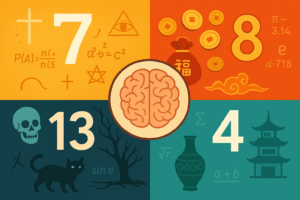
Western Cultures: The Power of 7
Origin: Biblical significance (7 days of creation), psychological preference for prime numbers
Applications: Slot machines, lottery games, religious ceremonies
Psychology: Cognitive fluency – 7 is distinctive and memorable
Chinese Culture: The Fortune of 8
Origin: Phonetic similarity – “bā” (八) sounds like “fā” (發) meaning prosperity
Applications: Phone numbers, addresses, business decisions, Olympic timing
Psychology: Linguistic determinism – sound shapes meaning
Japanese Culture: Avoiding 4 and 9
Origin: “Shi” (四) sounds like death, “ku” (九) sounds like suffering
Applications: Building floors, hospital rooms, gift quantities
Psychology: Linguistic fear – phonetic associations create avoidance
Hindu Culture: The Completeness of 108
Origin: Mathematical significance – divisible by many numbers, astronomical connections
Applications: Prayer beads, temple architecture, meditation practices
Psychology: Mathematical beauty – multiple factors create perceived perfection
The Linguistic Foundation of Number Beliefs
Linguistic research in cognitive science reveals how language shapes numerical preferences through phonetic associations. This phenomenon, known as sound symbolism, demonstrates that the sounds of number words influence their perceived meaning and desirability.
| Number | Culture | Pronunciation | Associated Word | Meaning | Result |
|---|---|---|---|---|---|
| 8 | Chinese | bā | fā | Prosperity/Wealth | Lucky |
| 4 | East Asian | sì/shi | sǐ/shi | Death | Unlucky |
| 13 | Western | thirteen | – | Historical association | Unlucky |
| 7 | Western | seven | heaven | Divine/Perfect | Lucky |
Economic Impact of Number Beliefs
The power of lucky numbers extends beyond personal psychology to significant economic effects. Research by economists studying market behavior reveals measurable impacts of numerical preferences on:
- Real Estate: Properties with lucky numbers sell for 2-3% higher prices
- Stock Markets: Stocks with lucky ticker symbols show higher trading volumes
- Consumer Behavior: Products with lucky numbers sell better in relevant cultural markets
- Business Operations: Companies spend millions to acquire lucky phone numbers and addresses
Chinese Lucky 8
Beijing Olympic Games started at 8:08 PM on 8/8/08
Western Lucky 7
Most chosen number in “pick a number” experiments
Unlucky 13
Many buildings skip the 13th floor
East Asian Unlucky 4
Often omitted from product serial numbers
The Cognitive Science of Number Preferences
Understanding why humans develop numerical preferences requires examining the cognitive mechanisms that underlie pattern recognition, memory formation, and meaning attribution.
Pattern Recognition and Cognitive Fluency
The human brain is exceptionally skilled at detecting patterns, even where none exist. This pattern-seeking tendency, combined with cognitive fluency principles, helps explain why certain numbers feel more “special” than others.
🧠 Three Key Cognitive Factors
1. Processing Fluency: Numbers that are easier to think about feel more meaningful. Prime numbers like 3, 7, and 11 require more cognitive processing, making them feel distinctive and memorable.
2. Perceptual Fluency: The physical appearance of numbers affects preferences. Symmetrical numbers (like 8) or visually balanced numbers often feel more appealing.
3. Conceptual Fluency: Numbers connected to familiar concepts (7 days, 12 months) feel more natural and significant.
Neuroscience research on numerical cognition reveals that different brain regions activate when processing “special” numbers versus ordinary ones. The anterior cingulate cortex, associated with attention and significance detection, shows increased activity when people encounter numbers they consider lucky.
Emotional Anchoring and Personal History
Beyond cultural influences, individual number preferences often stem from emotional anchoring—associating numbers with meaningful personal experiences. This psychological mechanism explains why birth dates, anniversaries, and significant life events become personally lucky numbers.
📈 Emotional Anchoring in Action
- Positive Association: Numbers linked to good memories feel lucky
- Availability Heuristic: Easily remembered positive number experiences seem more frequent
- Confirmation Bias: We notice when our lucky numbers appear in positive contexts
- Self-Fulfilling Prophecy: Confidence from lucky numbers can improve performance
The Mathematics of Perceived Randomness
Paradoxically, humans prefer numbers that feel random over those that actually are mathematically random. Research shows that people avoid numbers that seem “too regular” (like 1, 2, 3, 4, 5) even though these sequences are just as likely as any other combination in truly random systems.
This preference for “pseudorandomness” explains why lottery players avoid sequential numbers and prefer combinations that look scattered, even though this doesn’t improve their odds. It also connects to research on how our intuitions about probability often contradict mathematical reality.
🎯 Test Your Number Psychology!
How well do you understand the psychological and cultural forces that shape number preferences? Test your knowledge about cognitive biases, cultural beliefs, and the science behind numerical superstitions!
The Neuroscience of Numerical Meaning
Advanced brain imaging technology has begun to reveal how the human brain processes symbolic meaning in numbers, providing biological insights into why numerical superstitions feel so compelling.
Brain Networks and Number Processing
Functional MRI studies show that processing lucky numbers activates multiple brain networks simultaneously:
- Mathematical Processing Areas: The intraparietal sulcus handles basic numerical computation
- Emotional Processing Centers: The limbic system, particularly the amygdala, responds to lucky/unlucky numbers
- Memory Networks: The hippocampus connects numbers to stored experiences and associations
- Attention Systems: The prefrontal cortex increases focus when encountering significant numbers
🔬 Neurological Findings
A landmark study by researchers at Duke University found that people shown their personally lucky numbers demonstrated:
- Increased dopamine activity in reward processing centers
- Enhanced connectivity between emotional and cognitive brain regions
- Reduced activity in areas associated with anxiety and uncertainty
- Improved performance on subsequent cognitive tasks
The Placebo Effect of Lucky Numbers
Psychological research demonstrates that believing in lucky numbers can create measurable performance improvements through placebo effects. This isn’t because numbers actually influence outcomes, but because confidence and reduced anxiety improve cognitive function.
Studies show that participants who use their lucky numbers in laboratory tasks demonstrate:
- Reduced cortisol (stress hormone) levels
- Improved focus and attention
- Increased willingness to take calculated risks
- Better persistence in challenging tasks
Cultural Transmission and Number Beliefs
Understanding how numerical beliefs spread within cultures provides insights into broader mechanisms of cultural evolution and social learning.
Intergenerational Transmission
Lucky number beliefs demonstrate remarkable persistence across generations, transmitted through multiple channels:
🔄 How Number Beliefs Spread
Family Traditions: Parents pass numerical preferences to children through stories, rituals, and decision-making examples
Cultural Institutions: Schools, religious organizations, and media reinforce numerical symbolism
Social Modeling: Observing others’ numerical choices creates imitation and adoption
Narrative Embedding: Lucky number stories become part of cultural mythology
Digital Age Evolution of Number Beliefs
Modern technology has created new contexts for numerical superstitions while transforming traditional ones:
- Social Media: Angel numbers (111, 222, 333) have gained popularity through digital sharing
- Gaming: Virtual worlds create new lucky number contexts and reinforcement mechanisms
- Cryptocurrency: Wallet addresses and transaction values become new lucky number domains
- Dating Apps: Profile numbers and match percentages influence romantic decisions
Globalization and Number Belief Convergence
As cultures increasingly interact through global communication and commerce, number beliefs are beginning to merge and influence each other. Chinese lucky number 8 is gaining recognition in Western markets, while Western numerological concepts are influencing Eastern practices.
This cultural convergence creates fascinating hybrid belief systems where multiple numerical traditions coexist and interact, reflecting broader patterns of how ideas spread and evolve across cultural boundaries.
The Dark Side: When Number Beliefs Become Problematic
While most numerical preferences are harmless or even beneficial, some number beliefs can lead to problematic behaviors and decision-making errors.
Tetraphobia and Real-World Consequences
In East Asian cultures, tetraphobia (fear of the number 4) can significantly impact daily life and business decisions:
- Architecture: Buildings skip floor 4, affecting property values and urban planning
- Healthcare: Hospital room numbering creates logistical challenges
- Business: Product pricing and release timing avoid the number 4
- Aviation: Many Asian airlines avoid row 4 and gate numbers containing 4
Triskaidekaphobia in Western Culture
Fear of the number 13 (triskaidekaphobia) affects an estimated 6% of the U.S. population, leading to:
- Economic Losses: Reduced business on Friday the 13th costs millions annually
- Architectural Waste: Buildings without 13th floors waste valuable real estate
- Travel Disruption: Some people avoid travel on dates containing 13
- Medical Avoidance: Some people postpone medical procedures on unlucky dates
⚠️ When Number Beliefs Become Harmful
Decision Paralysis: Excessive focus on lucky numbers can delay important decisions
Financial Irrationality: Gambling based on lucky numbers ignores mathematical odds
Social Isolation: Extreme numerical avoidance can limit social and professional opportunities
Anxiety Disorders: Severe numerophobias can require clinical intervention
Practical Applications and Implications
Understanding the psychology and cultural significance of lucky numbers has practical applications across multiple domains.
Marketing and Consumer Psychology
Businesses leverage numerical preferences in sophisticated ways:
- Pricing Strategies: Using culturally lucky numbers in prices ($8.88, $7.77)
- Product Design: Incorporating lucky numbers in serial numbers and model names
- Launch Timing: Scheduling product releases on numerologically significant dates
- Branding: Creating brand names with lucky numerical associations
Educational Implications
Mathematics educators can use number preferences to enhance learning:
- Cultural Sensitivity: Understanding students’ numerical backgrounds and beliefs
- Engagement Strategies: Using lucky numbers to make math more personally relevant
- Critical Thinking: Examining numerical superstitions to teach statistical reasoning
- Cross-Cultural Learning: Exploring different numerical systems as cultural windows
Therapeutic Applications
Mental health professionals can use lucky number beliefs therapeutically:
- Anxiety Reduction: Lucky numbers as coping mechanisms and confidence boosters
- Cultural Identity: Numerical traditions as connections to heritage and family
- Behavioral Change: Lucky numbers as motivational tools for goal achievement
- Ritual Creation: Numerical practices as healthy habit formation
“Lucky numbers don’t change probability, but they can change psychology—and psychology influences outcomes.”
— Dr. Sarah Chen, Cognitive Psychology Research
The Future of Number Beliefs
As human society continues to evolve, so too will our relationships with numbers and numerical meaning.
Artificial Intelligence and Numerical Preferences
The rise of AI systems raises fascinating questions about numerical preferences:
- Algorithm Design: Should AI systems account for human numerical biases?
- Cultural Sensitivity: How can global technologies respect local numerical beliefs?
- Random Number Generation: What happens when AI creates “unlucky” combinations?
- Predictive Models: Can AI predict numerical preferences based on cultural data?
Virtual Worlds and Digital Numerology
As more human activity moves into digital spaces, new forms of numerical superstition are emerging:
- Cryptocurrency: Wallet addresses and transaction amounts as new lucky numbers
- Gaming: Virtual achievement numbers and score milestones
- Social Media: Follower counts, like numbers, and post metrics
- Data Analytics: Algorithm-generated numbers gaining superstitious significance
Conclusion: The Enduring Power of Numerical Meaning
The science behind lucky numbers reveals fundamental truths about human nature: we are meaning-making creatures who find patterns and significance in the most abstract concepts. Numbers, despite being mathematical abstractions, become vehicles for cultural identity, personal hope, and psychological comfort.
This tendency isn’t a flaw in human thinking—it’s a feature. The ability to attribute meaning to symbols allows for complex culture, shared beliefs, and social coordination. Lucky numbers serve as cultural markers that help people identify with groups, make decisions in uncertain situations, and maintain psychological well-being.
Understanding the psychology and cultural science behind numerical preferences provides several key insights:
- Universal Yet Diverse: All cultures develop numerical preferences, but the specific numbers vary based on linguistic, religious, and historical factors
- Cognitively Grounded: Number preferences reflect how our brains process information, recognize patterns, and form memories
- Culturally Transmitted: Numerical beliefs spread through families, institutions, and social networks across generations
- Psychologically Functional: Lucky numbers can improve performance, reduce anxiety, and enhance confidence through placebo effects
- Economically Significant: Numerical preferences influence major financial decisions and market behaviors
Perhaps most importantly, the science of lucky numbers demonstrates that human rationality and superstition aren’t opposites—they’re complementary systems that help us navigate a complex, uncertain world. Understanding when and why we rely on numerical beliefs can help us harness their benefits while avoiding their potential pitfalls.
The next time you find yourself drawn to a particular number, remember that you’re participating in one of humanity’s oldest and most universal practices: creating meaning from mathematics and finding comfort in the patterns we perceive in chaos.
Your lucky number might not change the odds, but it might just change your mindset—and sometimes, that’s exactly what makes the difference between success and failure, confidence and anxiety, hope and despair. In that sense, every number truly can be lucky, as long as it carries meaning for you.
Ready to test your own numerical intuitions? Try our Lucky Button and see what numbers feel special to you today! Remember, the science shows that believing in your lucky numbers can actually help them work—not through magic, but through the very real power of psychology.
🌐 Academic Resources & References:
- Cambridge Antiquity Journal: Archaeological Evidence of Ancient Number Beliefs
- Frontiers in Psychology: Sound Symbolism and Language
- NCBI: Neural Basis of Numerical Cognition
- NCBI: Psychology of Lucky Charms and Performance
- Nature: Cultural Evolution of Numerical Systems
- APA PsycNet: Cross-Cultural Number Preferences
- Cognition Journal: Linguistic Influences on Numerical Thought
- JSTOR: Economic Impact of Superstitious Beliefs
- Cognitive Science: Pattern Recognition and Meaning Attribution
- Cognition and Emotion: Numerical Preferences and Emotional Response
🔗 Related Articles on Lucky Button:
- 🧠 The Psychology of Luck: Why Some People Feel Luckier Than Others
- 📊 Probability & Statistics: The Math Behind Luck
- 🧪 Lucky Accidents That Changed the World
- 🌟 Share Your Luckiest Moment: Why Stories of Luck Matter
- 🍀 Lucky Charms: The Science Behind Belief and Performance
- 🧠 Mind Over Luck: How a Positive Mindset Shapes Your Fortune
📚 Scientific References:
- Dehaene, S. (2011). The Number Sense: How the Mind Creates Mathematics. Oxford University Press.
- Lakoff, G., & Núñez, R. (2000). Where Mathematics Comes From: How the Embodied Mind Brings Mathematics into Being. Basic Books.
- Nieder, A., & Dehaene, S. (2009). “Representation of number in the brain.” Annual Review of Neuroscience, 32, 185-208.
- Pica, P., Lemer, C., Izard, V., & Dehaene, S. (2004). “Exact and approximate arithmetic in an Amazonian indigene group.” Science, 306(5695), 499-503.
- Butterworth, B. (1999). What Counts: How Every Brain is Hardwired for Math. Free Press.
- Gordon, P. (2004). “Numerical cognition without words: Evidence from Amazonia.” Science, 306(5695), 496-499.
- Zhang, J., & Norman, D. A. (1995). “A representational analysis of numeration systems.” Cognition, 57(3), 271-295.
- Wynn, K. (1992). “Addition and subtraction by human infants.” Nature, 358(6389), 749-750.
- Barth, H., & Paladino, A. M. (2011). “The development of numerical estimation: Evidence against a representational shift.” Developmental Science, 14(1), 125-135.
🔗 Experience The Lucky Button
Try our original Lucky Button tool—a simple daily reminder to pause, breathe, and invite positive energy into your day.

Your Next Lucky Break Starts Here