Table of Contents
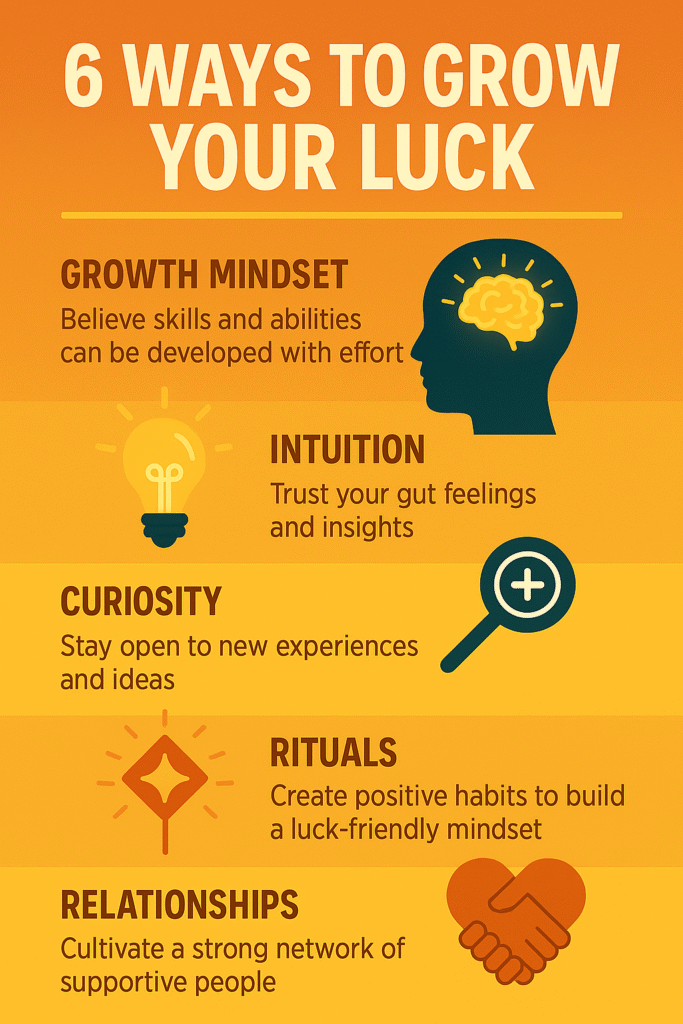
- 🧬 The Scientific Foundation of “Growing” Your Luck
- 🎯 The Four Pillars of Luck Cultivation
- 🎲 The Surprising Role of Randomness in Success
- 📈 Evidence-Based Strategies for Growing Your Luck
- 🧠 The Psychology of Opportunity Recognition
- 💭 Mindset Shifts That Attract Opportunity
- ⚠️ The Dark Side: When Luck-Seeking Becomes Counterproductive
- 📊 Measuring Your Luck Growth: Tracking Progress
- ⏳ The Long-Term Perspective: Luck as a Life Strategy
- 🌍 Cultural and Individual Variations in Luck Cultivation
- 🌟 Conclusion: Your Personal Fortune Garden
We often view luck as something beyond our control—a cosmic roll of the dice that determines our fate. But what if this fundamental assumption is wrong? What if luck isn’t just random chance, but something you can actually influence, cultivate, and grow through deliberate actions and mindset shifts?
This isn’t wishful thinking or new-age philosophy. Over the past two decades, rigorous scientific research has revealed that people can indeed increase their exposure to opportunity and favorable outcomes through specific psychological strategies and behavioral changes. The most successful individuals aren’t always the most talented—they’re often the ones who have learned to create their own good fortune.
Welcome to the fascinating world of “luck science,” where psychology meets opportunity, and where you’ll discover practical, evidence-based methods for growing your own luck in measurable ways.
The Scientific Foundation of “Growing” Your Luck
The idea that we can actively cultivate luck might sound whimsical, but research over the past two decades tells a different story. Scientists, psychologists, and behavioral researchers have found compelling evidence that while you can’t control randomness itself, you can absolutely influence your exposure to opportunity—and that’s what most people experience as “luck.”
The Landmark Research: Dr. Richard Wiseman’s “Luck Factor” Studies
The most significant breakthrough in luck research came from Dr. Richard Wiseman’s decade-long study at the University of Hertfordshire. Wiseman’s research identified four behavioral traits that differentiated self-described “lucky” people from their less fortunate counterparts.
Wiseman’s Four Principles of Self-Made Luck
1. Maximizing Chance Opportunities: Lucky people create, notice, and act upon chance opportunities by being open, observant, and socially engaged
2. Listening to Intuition: They trust their gut feelings and make decisions based on intuitive insights
3. Expecting Good Fortune: They maintain positive expectations, which often become self-fulfilling prophecies
4. Turning Bad Luck into Good: They reframe setbacks as opportunities and persist through difficulties
These weren’t people born under lucky stars—they simply lived in ways that maximized their exposure to chance opportunities. The research revealed that luck becomes less a matter of superstition and more a matter of strategic behavior and psychological positioning.
The Neuroscience Behind “Lucky” Behavior
Modern neuroscience research has begun to explain why Wiseman’s principles work at a biological level. Studies using fMRI brain imaging show that people who consider themselves lucky have different patterns of brain activity:
Brain Differences in “Lucky” People
- Enhanced Pattern Recognition: Greater activity in regions responsible for spotting connections and opportunities
- Reduced Stress Response: Lower cortisol levels and better stress management, allowing for clearer thinking
- Increased Social Cognition: More active mirror neuron systems that help read social situations
- Optimized Risk Assessment: Better balance between caution and calculated risk-taking
This research suggests that “lucky” behaviors literally rewire the brain to become better at recognizing and capitalizing on opportunities. The more you practice these behaviors, the more your neural pathways optimize for fortune-finding.
The Four Pillars of Luck Cultivation
Based on decades of research from psychology, behavioral economics, and neuroscience, we can identify four key areas where intentional effort can increase your exposure to good fortune.
The Four Pillars of Luck Cultivation
1. Opportunity Recognition & Creation
Lucky people actively create situations where chance encounters can occur. They attend events, maintain diverse social networks, and remain alert to unexpected possibilities.
Key Behavior: Say “yes” to invitations and new experiences more often than your comfort zone suggests.
2. Intuitive Decision Making
Research shows that unconscious pattern recognition often produces better decisions than lengthy analysis. Lucky people learn to trust and develop their intuitive capabilities.
Key Behavior: Practice mindfulness to tune into gut feelings and first impressions about situations and people.
3. Positive Expectation & Self-Fulfilling Prophecies
Optimistic expectations literally change behavior in ways that increase the likelihood of positive outcomes. This isn’t positive thinking—it’s positive action.
Key Behavior: Visualize successful outcomes while taking concrete steps to make them more likely.
4. Resilience & Opportunity Reframing
Lucky people excel at extracting value from setbacks, viewing failures as redirections rather than dead ends. They maintain longer-term perspectives that reveal hidden benefits.
Key Behavior: Ask “What else could this lead to?” when facing apparent setbacks or disappointments.
The Surprising Role of Randomness in Success
A fascinating twist in the science of luck reveals that even highly talented people may not always rise to the top—unless random factors intervene favorably. This research has profound implications for how we think about merit, effort, and fortune.
The Talent vs. Luck Model
A groundbreaking 2018 study from the University of Catania used complex computer simulations to model the relationship between talent and luck in determining success. The results were surprising: the most successful individuals in the simulation were not the most talented, but rather moderately talented people who encountered the most lucky breaks.
Key Findings from the Talent vs. Luck Study
- Random Events Dominate: Chance occurrences had a larger impact on success than individual merit alone
- Moderate Talent + High Luck > High Talent + Low Luck: Lucky breaks could amplify modest abilities more than pure talent without opportunities
- Network Effects: Being in the right place at the right time created exponential advantages
- Timing Sensitivity: The sequence and timing of events mattered as much as the events themselves
“Random events play a dominant role in success, despite individual merit. However, this doesn’t diminish the importance of preparation—luck favors the prepared mind.”
— Dr. Alessandro Pluchino, Lead Researcher
This doesn’t mean hard work doesn’t matter—it means that being in the right place at the right time, repeatedly, can dramatically amplify your efforts. And the research shows that certain mindsets and behaviors increase how often you step out to meet those opportunities.
Evidence-Based Strategies for Growing Your Luck
While we can’t script serendipity, we can adopt specific daily practices that increase its likelihood. Here are the most effective, research-backed strategies for cultivating good fortune.
Daily Practices That Expand Your “Luck Surface Area”
Keep a Serendipity Log
Write down surprising moments, helpful coincidences, or small wins. This rewires your attention to spot more “lucky” events over time.
Say “Yes” More Often
New experiences increase the surface area of luck. Attend that meetup, try a different route, talk to someone unexpected.
Practice Reframing Setbacks
Instead of seeing failure as bad luck, ask: “What else could this lead to?” This mental flip transforms quitting into pivoting.
Stay Calm, Stay Open
Stress narrows focus while calmness opens it. Regular mindfulness keeps your mind flexible and receptive to opportunities.
The Social Dimension of Luck
One of the most powerful ways to increase luck is through strategic relationship building. Research on social networks and opportunity reveals that most “lucky breaks” actually come through weak social ties—acquaintances, friends-of-friends, and casual connections.
The Weak Ties Advantage
Strong Ties (Close Friends/Family): Provide emotional support but limited new information
Weak Ties (Acquaintances/Colleagues): Bridge different social worlds and provide novel opportunities
Strategic Implication: Cultivate a diverse network of loose connections who operate in different fields and contexts
| Social Strategy | Implementation | Luck Mechanism | Expected Outcomes |
|---|---|---|---|
| Network Diversification | Join groups outside your profession | Cross-pollination of ideas and opportunities | Unexpected collaborations and insights |
| Weak Tie Maintenance | Regular check-ins with acquaintances | Access to non-redundant information | Job opportunities, partnerships |
| Generous Reciprocity | Help others without expecting returns | Building social capital and goodwill | Future favors and referrals |
| Active Listening | Focus on others’ needs and challenges | Identifying mutual benefit opportunities | Win-win collaborations |
The Psychology of Opportunity Recognition
One of the most crucial aspects of growing luck is developing what psychologists call “opportunity recognition”—the ability to spot potential advantages that others miss. This skill can be trained and improved through specific cognitive practices.
Pattern Recognition and Cognitive Flexibility
Lucky people excel at recognizing patterns and making unexpected connections. Research in cognitive psychology shows that this ability can be enhanced through deliberate practice.
Exercises to Improve Opportunity Recognition
- Cross-Domain Thinking: Regularly read outside your field and look for applications to your work
- Question Assumptions: Challenge conventional wisdom in your industry or personal life
- Trend Synthesis: Combine multiple trends to identify emerging opportunities
- Problem Inventory: Keep a running list of problems you encounter—each is a potential opportunity
The Attention Training Connection
A crucial finding in Wiseman’s research was that lucky people are more relaxed and open-minded, which allows them to notice opportunities that stressed, focused individuals miss. In one famous experiment, participants were asked to count photographs in a newspaper. Lucky people finished quickly because they noticed a large message that read: “Stop counting, there are 43 photographs.” Unlucky participants missed it entirely—they were too focused and stressed.
The Neuroscience of Attention and Luck
Focused Attention: Narrow, goal-directed focus that can miss peripheral opportunities
Open Attention: Relaxed awareness that notices unexpected possibilities
Optimal Balance: The ability to switch between focused and open attention states as needed
Test Your Luck Cultivation Knowledge!
How well do you understand the science behind growing your own luck? Test your knowledge about the psychological and behavioral strategies that create fortune!
Mindset Shifts That Attract Opportunity
Beyond specific behaviors and practices, growing your luck requires fundamental shifts in how you think about and interpret the world around you. These cognitive changes create the psychological foundation for all other luck-building strategies.
From Scarcity to Abundance Thinking
People who consider themselves lucky tend to operate from what psychologists call an “abundance mindset”—the belief that there are enough opportunities, resources, and good outcomes to go around. This contrasts sharply with “scarcity thinking,” which assumes that someone else’s success diminishes your own chances.
Abundance Mindset Research Findings
- Increased Risk-Taking: Abundance thinkers are more likely to pursue opportunities because they don’t fear missing out on limited chances
- Enhanced Collaboration: They’re more willing to help others succeed, creating reciprocal relationships
- Better Stress Management: Lower anxiety about competition allows for clearer thinking and decision-making
- Expanded Time Horizons: Focus on long-term relationship building rather than short-term zero-sum gains
Redefining Failure as Information
One of the most powerful mindset shifts for growing luck is changing how you interpret setbacks and failures. Research on growth mindsets shows that people who view challenges as learning opportunities rather than threats to their competence are more likely to persist and ultimately succeed.
“I have not failed. I’ve just found 10,000 ways that won’t work. Each ‘failure’ brings me closer to the solution.”
— Thomas Edison (attributed)
This reframing isn’t just positive thinking—it’s strategic thinking. When you view setbacks as data rather than defeats, you’re more likely to extract valuable lessons and maintain the persistence necessary for long-term success.
The Dark Side: When Luck-Seeking Becomes Counterproductive
While growing your luck through evidence-based strategies is beneficial, it’s important to recognize when luck-seeking behaviors can become problematic or self-defeating.
Warning Signs of Counterproductive Luck-Seeking
- Magical Thinking: Believing that thoughts alone can influence external events
- Excessive Risk-Taking: Pursuing opportunities without proper risk assessment
- Superstitious Escalation: Developing increasingly elaborate rituals that consume time and energy
- Attribution Errors: Consistently attributing success to luck and failure to external forces
- Opportunity Addiction: Saying yes to everything without strategic focus
The most effective luck cultivation maintains a balance between openness to opportunity and strategic focus. This connects to broader research on how rituals and practices can enhance confidence without crossing into problematic superstition.
Measuring Your Luck Growth: Tracking Progress
Unlike many personal development goals, luck cultivation can be measured through specific metrics and observational data. Tracking your progress helps maintain motivation and identifies which strategies work best for your particular situation.
Quantitative Luck Metrics
| Metric Category | Specific Measures | Tracking Method | Success Indicators |
|---|---|---|---|
| Opportunity Exposure | New people met, events attended, invitations received | Weekly counts in journal or app | Increasing trend over 3-6 months |
| Serendipitous Events | Unexpected positive outcomes, chance encounters | Qualitative descriptions with impact ratings | Higher frequency and impact scores |
| Network Quality | Weak tie connections, cross-industry relationships | Monthly network mapping | Increased diversity and connection strength |
| Resilience Response | Time to recover from setbacks, lessons extracted | Post-challenge reflection surveys | Faster recovery, more insights gained |
Qualitative Assessment Tools
Beyond numbers, regular self-assessment helps track the psychological and behavioral changes that underlie luck cultivation:
Weekly Luck Cultivation Review Questions
- What unexpected opportunities did I notice this week?
- How did I respond to setbacks or disappointments?
- What new connections or relationships did I make?
- Where did I step outside my comfort zone?
- What patterns or trends am I beginning to recognize?
- How has my general optimism and openness changed?
The Long-Term Perspective: Luck as a Life Strategy
Growing your luck isn’t about quick fixes or overnight transformations. It’s about adopting a comprehensive life strategy that positions you to recognize, attract, and capitalize on opportunities over the long term.
The Compound Effect of Luck Practices
Like compound interest in finance, luck-building behaviors create exponential returns over time. Each positive interaction, every new connection, and all the skills you develop create a foundation for future opportunities. Research on social capital accumulation shows that these effects can persist for decades.
The Five-Year Luck Cultivation Timeline
Year 1: Foundational habit building, initial network expansion
Year 2-3: Pattern recognition improvement, increased serendipitous events
Year 4-5: Compound effects emerge, reputation for “luckiness” develops
Long-term: Sustained opportunity flow, resilient advantage in career and life
Cultural and Individual Variations in Luck Cultivation
While the core principles of luck cultivation appear universal, research reveals important cultural and individual differences in how these strategies are best implemented.
Cross-Cultural Perspectives on Fortune Creation
Different cultures have varying approaches to creating good fortune, though the underlying psychological mechanisms remain consistent. Understanding these variations can help you adapt luck-building strategies to your cultural context and personal values.
This diversity of approaches connects to broader research on how different cultures understand and create luck through symbols and practices.
Conclusion: Your Personal Fortune Garden
Growing your luck isn’t magic—it’s applied psychology and strategic behavior change. The research is clear: while you can’t control random events, you can absolutely influence your exposure to opportunity, your ability to recognize potential, and your resilience in the face of setbacks.
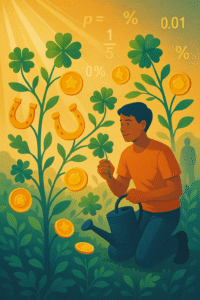
The most “fortunate” people aren’t necessarily the smartest or most skilled—they’re the ones who stay open to possibility, maintain diverse networks, trust their intuition, and persist through difficulties. They’re gardeners of opportunity, planting seeds of curiosity, watering them with optimism, and harvesting unexpected fortune along the way.
Key insights from the science of luck cultivation include:
- Behavioral Basis: Luck is largely a product of specific, learnable behaviors and cognitive patterns
- Network Effects: Most lucky breaks come through social connections, particularly weak ties
- Attention Training: The ability to switch between focused and open attention modes is crucial
- Resilience Advantage: Reframing setbacks as opportunities maintains momentum through difficulties
- Long-term Perspective: Luck cultivation creates compound advantages that accumulate over years
The journey of growing your luck begins with a single step: choosing to believe that you have more influence over your fortune than you might think. From there, it’s a matter of consistently applying evidence-based strategies, tracking your progress, and remaining open to the unexpected opportunities that will inevitably arise.
Remember, you’re not powerless in the face of chance—you’re an active participant in creating your own good fortune. Start small, stay consistent, and watch as your “luck” begins to improve in measurable, meaningful ways.
Ready to begin your luck cultivation journey? Try our Lucky Button as a daily reminder to pause, appreciate the good fortune in your life, and open your mind to the possibilities around you. Sometimes the journey toward better luck starts with a simple moment of gratitude and intention!
🌐 Academic Resources & References:
- Richard Wiseman: Official Research on Luck and Self-Development
- CNBC: The 4 Traits Lucky People Have in Common (Wiseman Study)
- ArXiv: Talent vs Luck – The Role of Randomness in Success (Pluchino et al.)
- ResearchGate: Talent vs Luck Research Publication
- Stanford News: The Strength of Weak Ties Research
- MIT News: Weak Ties and Job Opportunities Study
- Harvard Business Review: Growth Mindset Research (Carol Dweck)
- Psychological Science: Carol Dweck on Growth Mindsets
- SAGE Journals: Social Support and Weak Ties Research
- PMC: Mindsets Research Across Two Eras (Dweck & Yeager)
🔗 Related Articles on Lucky Button:
- 🧠 Mind Over Luck: How a Positive Mindset Can Shape Your Fortune
- 🍀 Lucky Charms: The Science Behind Belief and Performance
- 🌟 Rituals That Help You Feel Lucky
- 🍀 The Role of Serendipity in Everyday Life: How to Recognize and Embrace It
- 🎯 The Confidence-Luck Connection: Why Believing in Yourself Attracts Opportunity
📚 Scientific References:
- Wiseman, R. (2003). “The Luck Factor: The Four Essential Principles.” The Skeptical Inquirer, 27(3), 26-30.
- Pluchino, A., Biondo, A. E., & Rapisarda, A. (2018). “Talent versus Luck: the role of randomness in success and failure.” Advances in Complex Systems, 21(03n04), 1850014.
- Granovetter, M. S. (1973). “The strength of weak ties.” American Journal of Sociology, 78(6), 1360-1380.
- Dweck, C. S. (2006). Mindset: The New Psychology of Success. Random House.
- Bandura, A. (1977). “Self-efficacy: toward a unifying theory of behavioral change.” Psychological Review, 84(2), 191.
- Kahneman, D., & Tversky, A. (1979). “Prospect theory: An analysis of decision under risk.” Econometrica, 47(2), 263-291.
- Csikszentmihalyi, M. (1990). Flow: The Psychology of Optimal Experience. Harper & Row.
- Seligman, M. E. P. (2011). Flourish: A Visionary New Understanding of Happiness and Well-being. Free Press.
Experience The Lucky Button
Ready to start rewiring your brain for luck? Try our original Lucky Button tool—a simple daily reminder to shift your mindset toward possibility and positive expectation.

Your Next Lucky Break Starts With Your Mindset