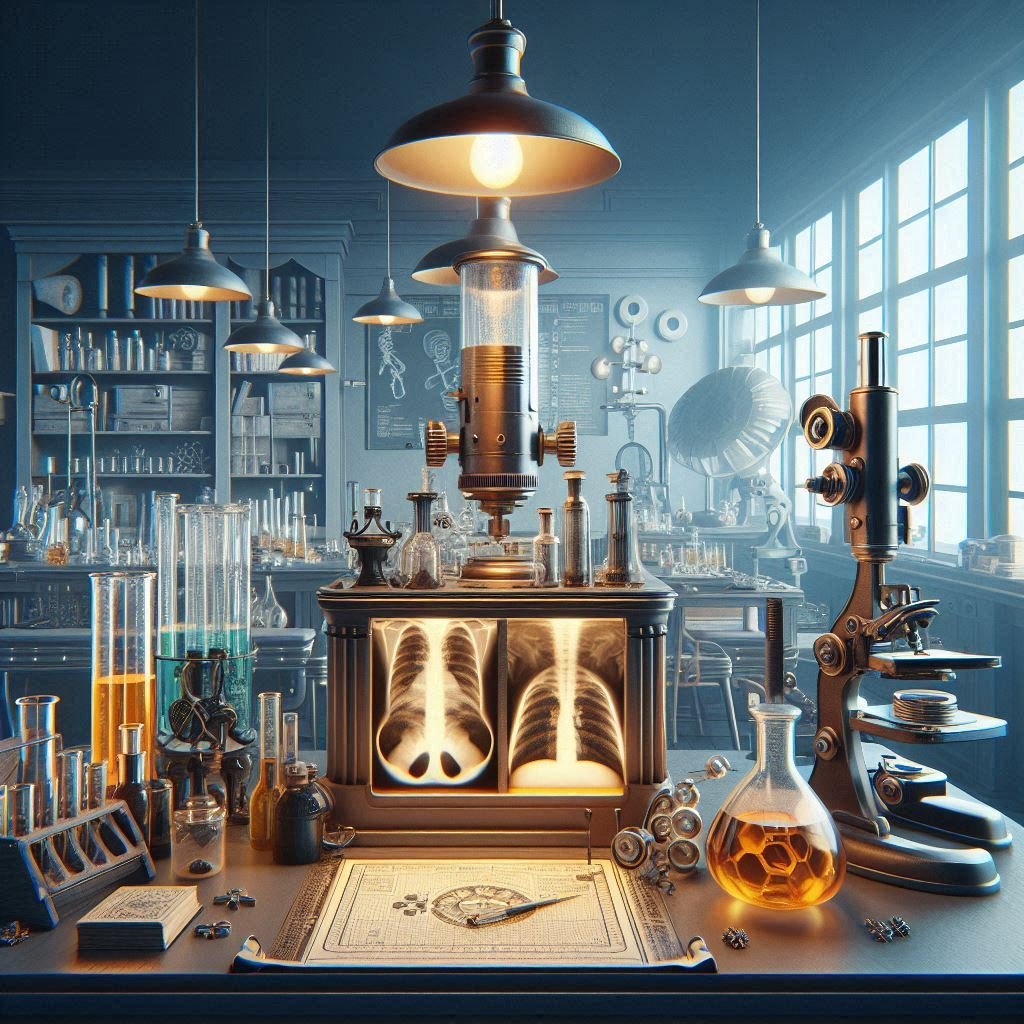
📋 Table of Contents
- Understanding Serendipity: When Luck Meets Preparation
- Life-Saving Accidents: Medical Discoveries That Changed Everything
- Everyday Conveniences: Accidents That Made Life Easier
- Sweet Accidents: Culinary Discoveries
- The Psychology of Serendipitous Discovery
- Creating Conditions for Serendipity
- Modern Serendipity: Recent Accidental Breakthroughs
- The Future of Serendipitous Discovery
- Lessons for Aspiring Discoverers
- Conclusion: The Ongoing Dance of Chance and Preparation
What if we told you that some of humanity’s greatest breakthroughs happened by complete accident? That the antibiotic that has saved millions of lives was discovered because a scientist forgot to clean his lab bench? Or that the kitchen appliance you probably used this morning was invented when a chocolate bar melted in someone’s pocket?
The history of human innovation is filled with these remarkable moments of serendipity—instances where careful observation, curious minds, and pure chance combined to create world-changing discoveries. These “happy accidents” reveal a fundamental truth about how progress happens: sometimes the most important innovations come not from pursuing specific goals, but from remaining open to unexpected possibilities.
Welcome to the extraordinary world of serendipitous discoveries, where luck meets preparation and curiosity transforms mistakes into miracles.
Understanding Serendipity: When Luck Meets Preparation
The term “serendipity” was coined in 1754 by author Horace Walpole, inspired by the Persian fairy tale “The Three Princes of Serendip.” The princes in the story possessed a remarkable ability to discover valuable things they weren’t specifically looking for—a perfect description of how many scientific breakthroughs actually occur.
Modern research reveals that serendipity isn’t just random luck. Studies in the psychology of discovery show that serendipitous breakthroughs require three key elements:
🔬 The Three Pillars of Serendipitous Discovery
1. Prepared Mind: The discoverer possesses enough knowledge to recognize the significance of an unexpected observation. Louis Pasteur famously said, “Chance favors the prepared mind.”
2. Acute Observation: The ability to notice anomalies, unexpected results, or unusual patterns that others might dismiss or overlook.
3. Creative Connection: The capacity to connect seemingly unrelated observations and imagine new possibilities or applications.
This combination explains why many accidental discoveries were made by researchers who were already working in related fields. They possessed the knowledge to understand what they were seeing and the creativity to envision its potential applications.
Life-Saving Accidents: Medical Discoveries That Changed Everything
Some of the most profound accidental discoveries have occurred in medicine, where chance observations led to treatments that have saved countless lives.
Penicillin: The Moldy Miracle (1928)
Perhaps the most famous accidental discovery in medical history began with what seemed like sloppy laboratory hygiene. Dr. Alexander Fleming, a Scottish bacteriologist at St. Mary’s Hospital in London, returned from a two-week vacation to find his laboratory in disarray.
Among the cluttered petri dishes containing bacterial cultures, Fleming noticed something extraordinary: one dish had developed a blue-green mold, and around this mold, the bacteria had completely disappeared. Rather than dismissing this as contamination, Fleming’s trained eye recognized the potential significance.
Estimated lives saved by penicillin and subsequent antibiotics
Fleming’s accidental discovery launched the antibiotic age. His Nobel Prize-winning work demonstrates how prepared observation can transform a laboratory “mistake” into a medical revolution. Penicillin became the template for modern antibiotic development and fundamentally changed how we treat bacterial infections.
X-Rays: Seeing Through Accidents (1895)
Wilhelm Röntgen’s discovery of X-rays represents another pivotal moment where scientific curiosity met accidental observation. While experimenting with cathode rays in his laboratory at the University of Würzburg, Röntgen noticed an unexpected fluorescent glow on a nearby screen covered with barium platinocyanide.
The screen was completely covered and positioned well beyond the expected range of cathode rays. Röntgen realized he had discovered a new form of radiation that could penetrate solid objects. His first X-ray image—of his wife’s hand, clearly showing her bones and wedding ring—amazed the scientific world.
Within months of Röntgen’s announcement, X-ray machines were being used in hospitals worldwide, revolutionizing medical diagnosis and treatment. This accidental discovery opened entirely new fields of physics and medicine.
Pacemaker: A Fortunate Electrical Mistake (1958)
Wilson Greatbatch was working on a circuit to record heart rhythms when he accidentally grabbed the wrong resistor from his toolbox. The resulting circuit produced rhythmic electrical pulses instead of recording them. Rather than discarding the “failed” device, Greatbatch realized these pulses might be able to stimulate a human heart.
His accidental circuit became the foundation for the first implantable cardiac pacemaker, a device that has extended millions of lives and continues to evolve today. This discovery shows how technical mistakes can become life-changing innovations when viewed with creative perspective.
Everyday Conveniences: Accidents That Made Life Easier
Many of our daily conveniences also emerged from unexpected discoveries and creative problem-solving in the face of apparent failures.
🏠 Revolutionary Household Discoveries
📡 Microwave Oven (1945)
While testing magnetron tubes for radar systems, Percy Spencer noticed that a chocolate bar in his pocket had melted. Intrigued, he experimented with other foods near the radar equipment. Popcorn kernels popped, and an egg exploded. Spencer realized microwave radiation could cook food rapidly and efficiently.
Impact: The first commercial microwave oven weighed 750 pounds and cost $5,000. Today, over 90% of American households own a microwave oven.
🧼 Velcro (1941)
After a hiking trip in the Swiss Alps, Swiss engineer George de Mestral found his clothes and his dog’s fur covered with burr seeds. Instead of simply removing them, he examined the burrs under a microscope and discovered tiny hooks that caught on fabric loops.
Impact: Velcro revolutionized fastening systems and is now used in everything from shoes and clothing to NASA spacesuits and medical devices.
📝 Post-it Notes (1968)
Spencer Silver was trying to create a super-strong adhesive but instead developed a weak, removable adhesive that could be repositioned multiple times. For years, this “failed” adhesive had no practical application until colleague Arthur Fry used it to create removable bookmarks for his hymnal.
Impact: Post-it Notes became one of 3M’s most successful products, generating billions in revenue and changing how people organize information.
Teflon: The Slippery Accident (1938)
Roy Plunkett, a chemist at DuPont, was working on developing new refrigerants when he stored some tetrafluoroethylene gas in pressurized cylinders. When he later opened the cylinders to use the gas, nothing came out. Cutting open the cylinder revealed a white, waxy substance that had extraordinary properties: it was chemically inert and incredibly slippery.
This accidental polymerization created polytetrafluoroethylene (PTFE), which we know as Teflon. Initially used in the Manhattan Project for gaskets and seals, Teflon later revolutionized cookware and countless industrial applications.
Sweet Accidents: Culinary Discoveries
The food industry has been shaped by numerous accidental discoveries that transformed cooking and eating experiences worldwide.
Chocolate Chip Cookies: A Recipe Revolution (1938)
Ruth Wakefield, owner of the Toll House Inn in Massachusetts, was preparing chocolate cookies for her guests but ran out of baker’s chocolate. She decided to chop up a Nestlé semi-sweet chocolate bar and add the pieces to her cookie dough, expecting them to melt and create chocolate cookies.
Instead, the chocolate pieces held their shape, creating the first chocolate chip cookies. Nestlé eventually bought her recipe in exchange for a lifetime supply of chocolate, and the chocolate chip cookie became America’s favorite cookie.
Coca-Cola: A Pharmaceutical Pivot (1886)
Dr. John Pemberton, an Atlanta pharmacist, was trying to create a cure for headaches and hangovers. His syrup concoction was accidentally mixed with carbonated water instead of still water when served to a customer. The resulting beverage was so delicious that it became the foundation for the Coca-Cola empire.
This “mistake” in preparation created what would become the world’s most recognized brand and demonstrated how accidental variations in established processes can lead to revolutionary products.
The Psychology of Serendipitous Discovery
Research in cognitive psychology reveals why some people are more likely to make serendipitous discoveries than others. Understanding these psychological factors can help us create conditions for our own innovative breakthroughs.
Cognitive Flexibility and Pattern Recognition
Studies show that people who make serendipitous discoveries often possess high levels of cognitive flexibility—the ability to switch between different conceptual frameworks and see connections others miss. This connects to research on why some people feel luckier than others.
Successful discoverers also demonstrate superior pattern recognition abilities, allowing them to notice anomalies and unexpected results that others might dismiss. This skill can be developed through practice and mindful observation.
Tolerance for Ambiguity
Research on innovation psychology shows that people comfortable with uncertainty and ambiguity are more likely to pursue unexpected observations rather than dismissing them as irrelevant errors.
This psychological trait allows discoverers to sit with confusion and explore anomalies rather than immediately trying to explain them away or ignore them.
The Growth Mindset Advantage
Psychologist Carol Dweck’s research on growth mindset reveals why some researchers view failures and unexpected results as learning opportunities while others see them as dead ends. People with growth mindsets are more likely to:
- Investigate unexpected results thoroughly
- View “failures” as valuable learning experiences
- Persist in exploring anomalous findings
- Collaborate with others to understand strange observations
Creating Conditions for Serendipity
While we cannot guarantee serendipitous discoveries, research suggests we can create environments and habits that increase their likelihood.
Cultivating Observational Skills
Developing keen observational abilities is fundamental to serendipitous discovery. This involves:
- Mindful Attention: Practicing present-moment awareness to notice subtle changes and anomalies
- Question Everything: Regularly asking “Why is this happening?” or “What if this means something else?”
- Document Anomalies: Keeping detailed records of unexpected results, even when they seem irrelevant
- Cross-Domain Thinking: Looking for connections between seemingly unrelated fields or observations
Building Diverse Knowledge Networks
Many serendipitous discoveries occur when knowledge from different fields intersects unexpectedly. Building diverse intellectual networks and maintaining curiosity across multiple domains increases the chances of making novel connections.
This principle relates to research on how mathematical thinking reveals hidden patterns in seemingly random events.
🎲 Test Your Serendipity Knowledge!
How well do you understand the science behind accidental discoveries? Test your knowledge about innovation, observation skills, and the psychology of breakthrough moments!
Organizational Support for Serendipity
Companies and research institutions can create cultures that promote serendipitous discovery by:
- Encouraging Experimentation: Providing time and resources for exploratory research
- Celebrating “Beautiful Failures”: Recognizing valuable learning from unexpected results
- Cross-Functional Collaboration: Creating opportunities for different disciplines to interact
- Knowledge Sharing Systems: Establishing ways to share unusual observations and anomalous results
Modern Serendipity: Recent Accidental Breakthroughs
Serendipitous discovery didn’t end with the classical examples. Recent decades have produced remarkable accidental breakthroughs that continue this tradition.

Viagra: From Heart Medicine to Lifestyle Drug (1989)
Pfizer researchers were testing sildenafil as a treatment for angina (chest pain caused by reduced blood flow to the heart). While the drug showed limited effectiveness for its intended purpose, researchers noticed an unexpected side effect in male participants.
Rather than abandoning the research, scientists pursued this accidental discovery, leading to one of the most successful pharmaceutical launches in history and opening new treatments for erectile dysfunction.
Graphene: The Scotch Tape Discovery (2004)
Andre Geim and Konstantin Novoselov at the University of Manchester were experimenting with graphite using increasingly sophisticated methods to create thin layers. Frustrated with their progress, they tried the simple approach of using Scotch tape to peel layers off graphite.
This playful experiment led to the isolation of graphene—a single layer of carbon atoms with extraordinary properties. Their Nobel Prize-winning discovery opened new frontiers in materials science and nanotechnology.
The Future of Serendipitous Discovery
As we move into an age of artificial intelligence and automated research, questions arise about the future of serendipitous discovery. Can machines make accidental breakthroughs, or is human curiosity and intuition irreplaceable?
AI and Pattern Recognition
Machine learning systems excel at recognizing patterns in vast datasets, potentially identifying connections that human researchers might miss. However, current AI lacks the contextual understanding and creative intuition that enables humans to recognize truly significant anomalies.
The future likely lies in human-AI collaboration, where machines help identify unusual patterns while humans provide the creativity and judgment to evaluate their significance.
The Persistence of Human Curiosity
Despite technological advances, the fundamental elements of serendipitous discovery—curiosity, observation, and creative connection-making—remain distinctly human capabilities. The most breakthrough innovations will likely continue to emerge from the intersection of prepared minds and unexpected observations.
Lessons for Aspiring Discoverers
What can we learn from the history of accidental discoveries? Several key principles emerge:
- Embrace Failure: Every unexpected result is a potential breakthrough waiting to be recognized
- Stay Curious: Ask questions about anomalies rather than dismissing them
- Think Across Boundaries: Look for connections between different fields and domains
- Document Everything: Keep detailed records of unusual observations and results
- Collaborate Widely: Share observations with people from different backgrounds and expertise
- Maintain Optimism: Believe that unexpected discoveries are possible and valuable
These principles connect directly to research on how our minds create patterns and meaning from randomness.
Conclusion: The Ongoing Dance of Chance and Preparation
The history of accidental discoveries reveals a profound truth about human innovation: our greatest breakthroughs often emerge not from rigid planning, but from the dynamic interaction between preparation and chance, knowledge and curiosity, observation and imagination.
From Fleming’s moldy petri dish to Spencer’s melted chocolate bar, from Wakefield’s improvised cookies to Röntgen’s mysterious rays, these serendipitous moments share common elements: prepared minds that could recognize significance in the unexpected, curiosity strong enough to investigate anomalies, and creativity sufficient to envision new possibilities.
In our rapidly advancing world, the capacity for serendipitous discovery remains as valuable as ever. While we cannot control when chance will present us with unexpected opportunities, we can prepare ourselves to recognize and capitalize on them when they arise.
The next great accidental discovery may be waiting in a laboratory mistake, a kitchen experiment, or a chance observation during a routine task. The question is not whether these opportunities will arise—they inevitably will. The question is whether we’ll have developed the observational skills, intellectual curiosity, and creative courage to transform accidents into innovations.
As you go through your daily activities, remember that serendipitous discoveries await those who remain curious about the unexpected. Pay attention to anomalies, investigate the unusual, and ask “what if?” when others might simply clean up the mess.
Your next accident might just change the world.
Ready to embrace your own serendipitous moment? Try our Lucky Button and see what unexpected discovery awaits you! Remember, fortune favors the prepared mind—and the curious heart.
🌐 Additional External Resources:
- Nobel Prize: Alexander Fleming Biography and Penicillin Discovery
- Smithsonian Magazine: How the Microwave Was Invented by Accident
- American Physical Society: The Discovery of X-rays
- Nature: The Science of Serendipity in Research
- Frontiers in Psychology: Innovation and Serendipity Research
- Nobel Prize: Graphene Discovery by Geim and Novoselov
- 3M Company: The History of Post-it Notes
- Nestlé History: The Chocolate Chip Cookie Story
- Coca-Cola Company: The Accidental Discovery of Coca-Cola
- Chemical Heritage Foundation: Roy Plunkett and Teflon
- Louis Pasteur Quotes: “Chance favors the prepared mind”
🔗 Related Articles on Lucky Button:
- 🧠 The Psychology of Luck: Why Some People Feel Luckier Than Others
- 🎲 The Science Behind Lucky Numbers
- 📊 Probability & Statistics: The Math Behind Luck
- 🌟 Share Your Luckiest Moment: Why Stories of Luck Matter
- 🧠 Mind Over Luck: How a Positive Mindset Shapes Your Fortune
- 🍀 Lucky Charms: The Science Behind Belief and Performance
📚 Research References:
- Fleming, A. (1929). “On the antibacterial action of cultures of a Penicillium, with special reference to their use in the isolation of B. influenzae.” British Journal of Experimental Pathology, 10(3), 226-236.
- Röntgen, W. C. (1895). “On a new kind of rays.” Proceedings of the Würzburg Physical-Medical Society.
- Van Andel, P. (1994). “Anatomy of the unsought finding. Serendipity: Origin, history, domains, traditions, appearances, patterns and programmability.” British Journal for the Philosophy of Science, 45(2), 631-648.
- Roberts, R. M. (1989). Serendipity: Accidental Discoveries in Science. John Wiley & Sons.
- Merton, R. K., & Barber, E. (2004). The Travels and Adventures of Serendipity. Princeton University Press.
- Copeland, S. (2019). “On serendipity in science: Discovery at the intersection of chance and wisdom.” Synthese, 196(6), 2385-2406.
- Dweck, C. S. (2006). Mindset: The New Psychology of Success. Random House.
- Simonton, D. K. (2004). “Creativity in science: Chance, logic, genius, and zeitgeist.” Cambridge University Press.
- Austin, J. H. (1978). Chase, Chance, and Creativity: The Lucky Art of Novelty. Columbia University Press.
- Kantorovich, A. (1993). Scientific Discovery: Logic and Tinkering. SUNY Press.
🔗 Experience The Lucky Button
Try our original Lucky Button tool—a simple daily reminder to pause, breathe, and invite positive energy into your day.

Your Next Lucky Break Starts Here
Try this:
 The Money Script – Reprogram Your Financial Luck** Manifestation Magic – Attract What You Focus On
These tools pair perfectly with your own beliefs — empowering you to turn symbolic energy into real-world results.