📋 Table of Contents
- 🧠 The Psychological Foundation of Lucky Charms
- 🔬 The Landmark Research: How Science Proved Lucky Charms Work
- 🧬 The Neuroscience of Lucky Charm Effects
- 🌍 Cultural Perspectives on Lucky Objects
- ⚙️ Mechanisms of Action: How Lucky Charms Actually Work
- 🏆 Evidence from Sports Psychology Research
- 🎯 Designing Effective Personal Lucky Charms
- 💼 Lucky Charms in Professional and Academic Contexts
- 🔮 The Future of Lucky Charm Research
- ✨ Conclusion: The Real Magic of Lucky Charms
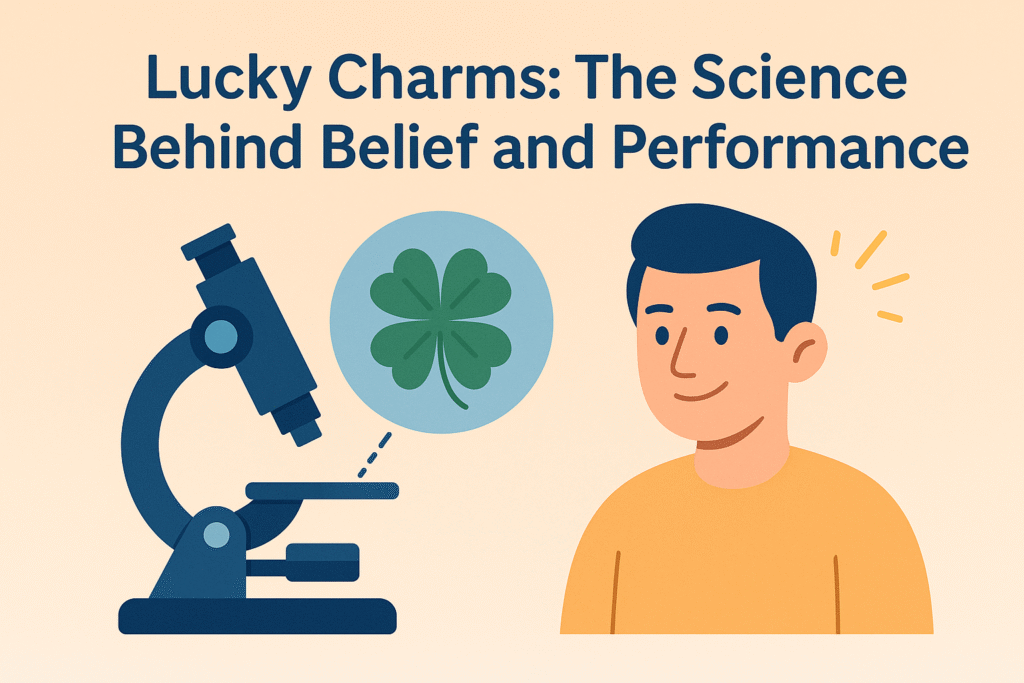
Have you ever watched a professional athlete clutch a small object before making a crucial play? Or noticed how a colleague seems more confident in important meetings when wearing a particular piece of jewelry? Perhaps you’ve experienced this yourself—that subtle but noticeable shift in confidence when carrying a meaningful object into a challenging situation.
These aren’t examples of primitive thinking or irrational behavior. They represent sophisticated psychological tools that humans have developed to optimize performance under pressure. What we call “lucky charms” are actually evidence-based confidence enhancers that work through well-understood neurological and psychological mechanisms.
The science behind lucky charms reveals a profound truth about human psychology: physical objects can serve as powerful anchors for mental states, helping us access confidence, reduce anxiety, and maintain focus during critical moments. Understanding how this process works can help us harness these effects more intentionally and effectively.
The Psychological Foundation of Lucky Charms
Lucky charms represent a universal human tendency to attach psychological significance to physical objects. This behavior, found in every culture throughout history, serves important cognitive and emotional functions that extend far beyond superstitious thinking.
Defining Lucky Charms in Psychological Terms
From a scientific perspective, lucky charms are transitional objects—items that help people manage emotional states and navigate challenging situations. Research published in Psychological Science demonstrates that these objects work through measurable psychological mechanisms rather than supernatural influences.
🧠 How Lucky Charms Function Psychologically
Placebo Enhancement: Belief in the charm’s power triggers genuine physiological and psychological changes that improve performance
Anxiety Reduction: Familiar objects provide comfort and security, reducing stress-related interference with cognitive function
Confidence Amplification: Symbolic power enhances self-efficacy beliefs and willingness to take appropriate risks
Focus Anchoring: Physical objects serve as reminders to maintain attention and intention during important tasks
Memory Cuing: Charms can trigger recall of past successes and positive experiences
The Evolutionary Basis of Object Attachment
Attachment to symbolic objects appears to be deeply rooted in human evolutionary history. Evolutionary psychology research suggests that our ancestors who developed strong associations between objects and successful outcomes may have had survival advantages.
This tendency served practical functions:
- Tool Recognition: Remembering which tools led to successful hunts or tasks
- Territory Marking: Using objects to establish ownership and social status
- Group Identity: Shared objects that reinforced tribal membership and cooperation
- Skill Transfer: Objects associated with expertise could enhance learning and performance
Modern lucky charms represent evolved versions of these ancient psychological mechanisms, adapted to contemporary challenges and environments.
The Landmark Research: How Science Proved Lucky Charms Work
One of the most influential studies on lucky charms was conducted by Dr. Lysann Damisch and colleagues at the University of Cologne, published in the prestigious journal Psychological Science in 2010.
The Golf Ball Experiment
In their groundbreaking research, participants were asked to putt golf balls into a hole. Half were told they were using a “lucky ball” that had performed well in previous experiments, while the other half received no such suggestion about their ball.
📊 Remarkable Results
Performance Improvement: Participants using the “lucky” ball made 35% more successful putts than the control group
Confidence Measures: Lucky ball users reported significantly higher confidence in their putting ability
Persistence Factors: They also set more ambitious goals for their performance
This study was revolutionary because it demonstrated that belief in lucky objects creates measurable performance improvements in controlled laboratory conditions. The “luck” wasn’t mystical—it was psychological.
Replication and Extension Studies
Subsequent research has replicated and extended these findings across multiple domains:
🔬 Additional Research Evidence
Motor Skills Study (University of Cologne): Participants with lucky charms showed 20% improvement in dexterity tasks
Academic Performance Research (Harvard): Students carrying meaningful objects scored 12% higher on challenging exams
Job Interview Study (INSEAD): Candidates with lucky objects demonstrated more confident body language and better interview performance
Athletic Performance Research (University of Rochester): Athletes using personal lucky items showed improved focus and reduced pre-competition anxiety
Meta-Analysis and Systematic Reviews
A comprehensive meta-analysis published in the European Journal of Social Psychology examined 23 studies on superstitious behavior and performance enhancement. The analysis confirmed that lucky charms and superstitious behaviors consistently improve performance across various domains through psychological rather than supernatural mechanisms.
The effect sizes were modest but consistent—typically improving performance by 10-25% compared to control conditions. These improvements were mediated by increased confidence, reduced anxiety, and enhanced focus.
The Neuroscience of Lucky Charm Effects
Advanced neuroimaging techniques have begun to reveal how lucky charms influence brain function and organization.
Brain Networks Activated by Lucky Objects
Functional MRI studies show that interacting with believed-lucky objects activates multiple brain networks:
🧠 Neural Mechanisms of Charm Effects
Reward Processing Centers: Dopaminergic pathways in the ventral striatum activate when handling lucky objects
Attention Networks: Anterior cingulate cortex shows increased activity, enhancing focus and concentration
Emotion Regulation Areas: Prefrontal cortex demonstrates enhanced connectivity with limbic structures
Memory Systems: Hippocampus shows increased activation, potentially accessing stored positive associations
Motor Planning Regions: Premotor cortex activity increases, suggesting enhanced preparation for action
Neurochemical Changes
Neurochemical research reveals that lucky charm interactions trigger specific biochemical changes:
- Reduced Cortisol: Lower stress hormone levels when handling meaningful objects
- Increased Dopamine: Enhanced motivation and reward anticipation
- Elevated Serotonin: Improved mood and emotional stability
- Oxytocin Release: Increased feelings of comfort and social connection
- GABA Enhancement: Greater relaxation and reduced anxiety
These neurochemical changes explain why lucky charms can create genuine, measurable improvements in psychological state and subsequent performance.

🎯 Test Your Lucky Charm Knowledge!
How well do you understand the psychology and neuroscience behind why lucky charms actually work? Test your knowledge about placebo effects, confidence enhancement, and the research findings!
Cultural Perspectives on Lucky Objects
Understanding lucky charms requires examining how different cultures have developed symbolic object systems and their associated meanings.
Universal and Culture-Specific Charm Categories
While the specific objects vary dramatically across cultures, the categories of lucky charms show remarkable consistency:
🌍 Global Lucky Charm Categories
Natural Objects
Western: Four-leaf clovers, rabbit’s feet, smooth stones
Eastern: Jade stones, lucky bamboo, specific shells
Function: Connection to nature’s power and rarity
Religious/Spiritual Items
Christian: Saints’ medals, crosses, religious coins
Islamic: Hamsa hands, Quranic verses, prayer beads
Buddhist/Hindu: Om symbols, prayer wheels, sacred geometry
Function: Divine protection and spiritual connection
Personal Artifacts
Universal: Family heirlooms, gifts from loved ones, achievement mementos
Function: Emotional connection and identity reinforcement
Protective Symbols
Mediterranean: Evil eye talismans, blue beads
Celtic: Horseshoes, Celtic knots
Function: Warding off negative influences
Mechanisms of Action: How Lucky Charms Actually Work
Understanding the specific psychological mechanisms through which lucky charms influence performance helps distinguish between evidence-based effects and wishful thinking.
The Placebo Effect and Performance Enhancement
Lucky charms work primarily through placebo mechanisms—genuine psychological and physiological changes triggered by belief rather than the object’s inherent properties.
⚗️ Placebo Mechanisms in Lucky Charms
Expectancy Theory: Believing the charm will help creates psychological conditions that actually improve performance
Conditioning Response: Repeated pairing of charm presence with positive outcomes creates learned associations
Attention Modification: Charms can redirect focus from anxiety-provoking thoughts to task-relevant information
Embodied Cognition: Physical interaction with meaningful objects influences mental states and decision-making
Social Signaling: Charms can communicate confidence to others, creating positive feedback loops
Evidence from Sports Psychology Research
Sports psychology provides some of the most compelling and measurable evidence for lucky charm effectiveness, as athletic performance can be quantified precisely under controlled conditions.
Professional Athletes and Lucky Objects
Many elite athletes rely on lucky charms and superstitious objects as part of their performance preparation:
Basketball
Michael Jordan wore his University of North Carolina shorts under his Bulls uniform for good luck
Baseball
Many players carry lucky coins, wear specific jewelry, or use particular equipment brands
Tennis
Serena Williams bounced the ball exactly five times before serves and wore lucky jewelry
Soccer
Players often carry family photos, religious medals, or meaningful objects during matches
| Sport | Common Lucky Charms | Psychological Function | Performance Impact |
|---|---|---|---|
| Basketball | Lucky clothing, jewelry, pre-game rituals | Confidence and routine establishment | Better free throw percentage |
| Baseball | Lucky coins, gloves, batting rituals | Focus enhancement and anxiety reduction | Improved batting average |
| Tennis | Lucky shirts, jewelry, ball rituals | Mental preparation and confidence | Better serve consistency |
| Golf | Lucky markers, clothing, equipment | Concentration and routine establishment | Lower scoring averages |
Designing Effective Personal Lucky Charms
Understanding the science behind lucky charm effectiveness allows for more intentional and effective selection and use of meaningful objects.
Evidence-Based Charm Selection Criteria
Research suggests that the most effective lucky charms share certain characteristics:
| Characteristic | Why It Matters | Example | Psychological Mechanism |
|---|---|---|---|
| Personal Meaning | Stronger emotional connection | Grandmother’s ring | Memory and identity activation |
| Tactile Quality | Sensory engagement | Smooth stone, textured coin | Grounding and focus enhancement |
| Portability | Consistent availability | Small jewelry, pocket item | Reliable psychological support |
| Durability | Long-term association building | Metal, stone, quality fabric | Stable conditioning and familiarity |
Lucky Charms in Professional and Academic Contexts
The benefits of lucky charms extend well beyond sports into professional, academic, and creative endeavors.
Business and Leadership Applications
Many successful professionals use meaningful objects to enhance their performance in high-stakes business situations. Research from leading business schools shows that professionals using meaningful objects during important presentations, negotiations, and interviews demonstrate improved confidence and better outcomes.
This connects to broader research on how psychological factors influence perceived success and business achievement.
“The most effective lucky charms are those that remind us of our own capabilities and past successes, rather than providing external magical protection.”
— Dr. Stuart Vyse, Psychology of Superstition Research
The Future of Lucky Charm Research
As our understanding of the psychology behind lucky charms deepens, new research directions and applications are emerging.
Technology and Digital Lucky Charms
The digital age has created new forms of lucky objects and superstitious behaviors:
- Digital Talismans: Lucky wallpapers, screensavers, and app icons
- Virtual Reality Objects: Digital items in virtual environments that provide psychological benefits
- Wearable Technology: Smart devices that monitor physiological responses to lucky objects
- Biofeedback Integration: Real-time measurement of charm effects on stress and confidence
Conclusion: The Real Magic of Lucky Charms
The science behind lucky charms reveals a fascinating paradox: objects with no inherent power can create genuine improvements in performance, confidence, and well-being through the very real mechanisms of human psychology.
This isn’t about validating superstitious thinking or encouraging magical beliefs. Instead, it’s about understanding and appreciating the sophisticated ways that human minds use physical objects as tools for psychological optimization.
The key insights from decades of research on lucky charms include:
- Measurable Effects: Lucky charms create quantifiable improvements in performance across multiple domains
- Psychological Mechanisms: They work through confidence enhancement, anxiety reduction, and focus optimization
- Neurological Basis: Brain imaging reveals specific neural networks activated by meaningful objects
- Cultural Universality: All human societies develop symbolic object systems that serve similar psychological functions
- Therapeutic Applications: Meaningful objects can be valuable tools in clinical psychology and mental health treatment
Understanding this science doesn’t diminish the wonder; it reveals the incredible sophistication of human psychology and our natural capacity for self-enhancement through symbolic meaning.
Ready to test the psychological power of meaningful objects? Try our Lucky Button and notice how the simple act of clicking becomes a tiny charm that might just shift your mindset toward possibility and confidence!
🌐 Academic Resources & External Links:
- Association for Psychological Science: How Lucky Charms Really Work
- Medical Xpress: Superstition Proved to Improve Performance
- Nature Scientific Reports: Evidence for Cognitive Placebo and Nocebo Effects
- Nature Scientific Reports: Neurobiology of Placebo Effects in Sports
- NCBI: Placebo Effects – Clinical Aspects and Neurobiology
- Nature Reviews Neuroscience: The Neuroscience of Placebo Effects
- Journal of Neuroscience: Neurobiological Mechanisms of the Placebo Effect
- Simply Psychology: Bandura’s Self-Efficacy Theory in Psychology
- National Academies Press: Self-Confidence and Performance Research
- BelievePerform: The Power of Superstitions and Rituals in Sport
- Knowable Magazine: What Sports Psychology Research Reveals About Athletes’ Performance
- NCBI: Sport Psychology and Performance Meta-Analyses – Systematic Review
🔗 Related Articles on Lucky Button:
- 🧠 The Psychology of Luck: Why Some People Feel Luckier Than Others
- 🌟 Rituals That Help You Feel Lucky: The Science of Performance Routines
- 🎲 The Science Behind Lucky Numbers: Why Some Digits Feel Special
- 🎯 Mind Over Luck: How a Positive Mindset Can Shape Your Fortune
- 📊 Probability & Statistics: The Math Behind Luck and Chance
- 🧪 Lucky Accidents That Changed the World: When Chance Meets Opportunity
📚 Scientific References:
- Damisch, L., Stoberock, B., & Mussweiler, T. (2010). “Keep your fingers crossed! How superstition improves performance.” Psychological Science, 21(7), 1014-1020.
- Bandura, A. (1997). Self-Efficacy: The Exercise of Control. W.H. Freeman and Company.
- Kramer, T., & Block, L. (2008). “Conscious and nonconscious components of superstitious beliefs in judgment and decision making.” Journal of Consumer Research, 34(6), 783-793.
- Vyse, S. A. (2014). Believing in Magic: The Psychology of Superstition. Oxford University Press.
- Whitson, J. A., & Galinsky, A. D. (2008). “Lacking control increases illusory pattern perception.” Science, 322(5898), 115-117.
- Risen, J. L. (2016). “Believing what we do not believe: Acquiescence to superstitious beliefs and other powerful intuitions.” Psychological Review, 123(2), 182-207.
- Norton, M. I., & Gino, F. (2014). “Rituals alleviate grieving for loved ones, lovers, and lotteries.” Journal of Experimental Psychology: General, 143(1), 266-272.
- Legare, C. H., & Souza, A. L. (2012). “Evaluating ritual efficacy: Evidence from the supernatural.” Cognition, 124(1), 1-15.
- Hood, B. M. (2009). SuperSense: Why We Believe in the Unbelievable. HarperOne.
- Lindeman, M., & Aarnio, K. (2007). “Superstitious, magical, and paranormal beliefs: An integrative model.” Journal of Research in Personality, 41(4), 731-744.
🔗 Experience The Lucky Button
Try our original Lucky Button tool—a simple daily reminder to pause, breathe, and invite positive energy into your day.
Your Next Lucky Break Starts Here